The Beauty of the "Imperfect": Turning a Wild-Grain White Ash Bowl
There is a specific kind of magic that happens when you mount a piece of wood on the lathe and realize you aren't just turning a shape—you're revealing a story.
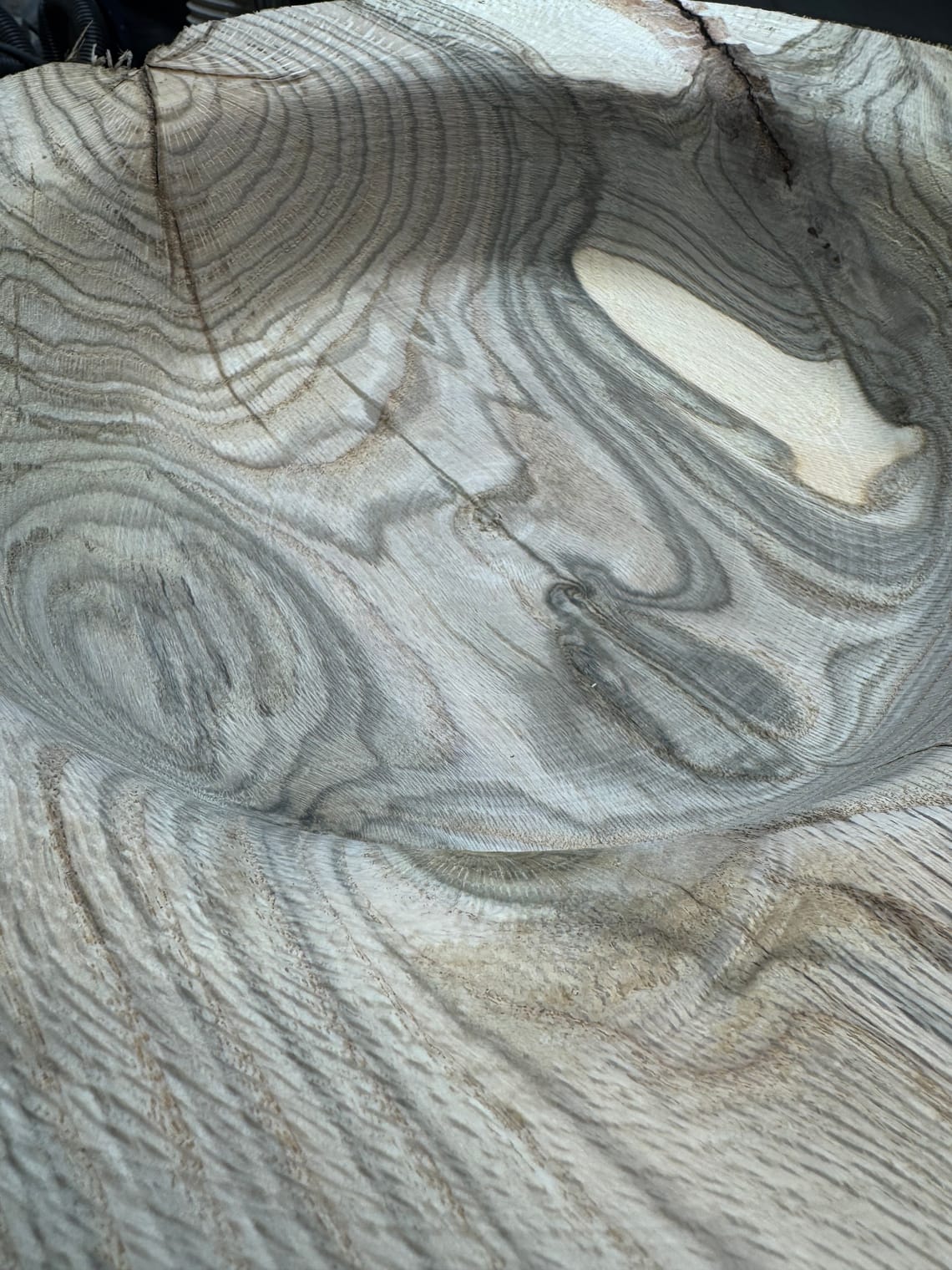
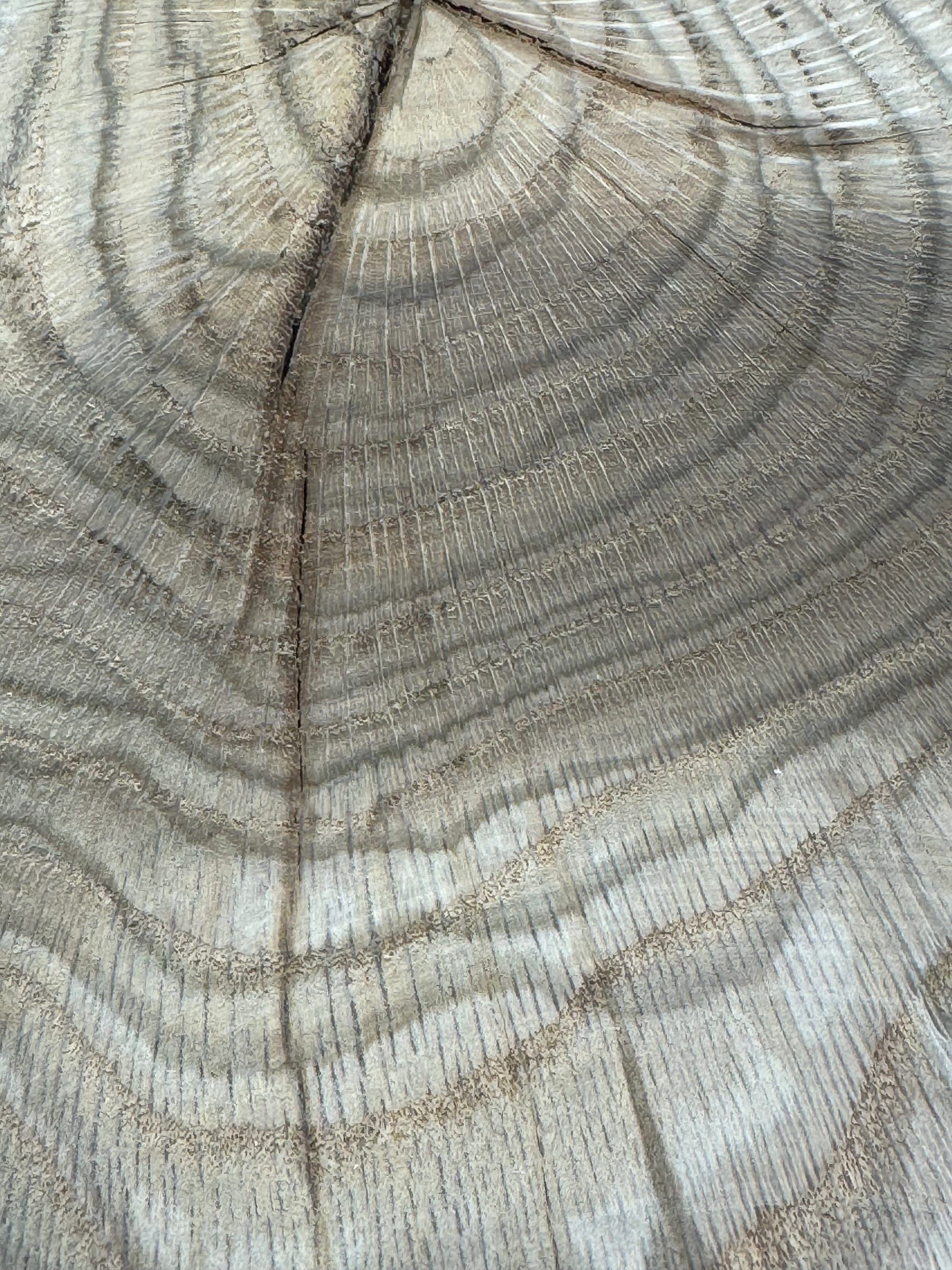
Recently, I came across this piece of White Ash (maybe?) that felt different from the usual straight-grained stock. It was weathered, aged, and carried the marks of a life lived outdoors: a prominent pin knot, deep medullary rays, and the subtle, smoky "clouds" of early-stage spalting. To many, these might look like defects. To a turner, they are a roadmap.
The Challenge of Character
Working with highly figured Ash presents a unique set of challenges. Because the grain is so prominent and "toothy," the wood can be temperamental. As I began the roughing stage, I could feel the tool reacting to the dense knots and the shifting direction of the growth rings.
One of the most striking features of this piece is the sapwood/heartwood contrast. The bright, creamy white of the sapwood sits in dramatic opposition to the muted, silvery-grey tones of the heartwood.
Navigating the "Eye"
The centerpiece of this bowl is a tight, swirling "eye" knot near the rim. In the turning process, knots like this are high-density zones. They require a sharper tool and a lighter touch to avoid tear-out. But once you clear the excess material, that eye becomes the focal point—a natural "cyclone" that draws the viewer's gaze into the center of the piece.
Embracing the Natural Edge
You’ll notice a small bark inclusion and a natural radial check in the final form. Rather than trying to sand these away or hide them, I chose to celebrate them. In a world of mass-produced, perfect symmetry, there is something deeply grounding about a piece that acknowledges its origins as a living, breathing thing.
What’s Next?
The piece is currently "off the tool"—raw, thirsty, and full of potential. The next step is drying for 12 months or more, before I put it back on the lathe to start the final shaping. Then a multi-stage sanding process to smooth out those coarse pores, followed by a penetrating oil finish to bring out the incredible chatoyancy (the shimmering, 3D effect) hidden within the grain.
Stay tuned for the final reveal!