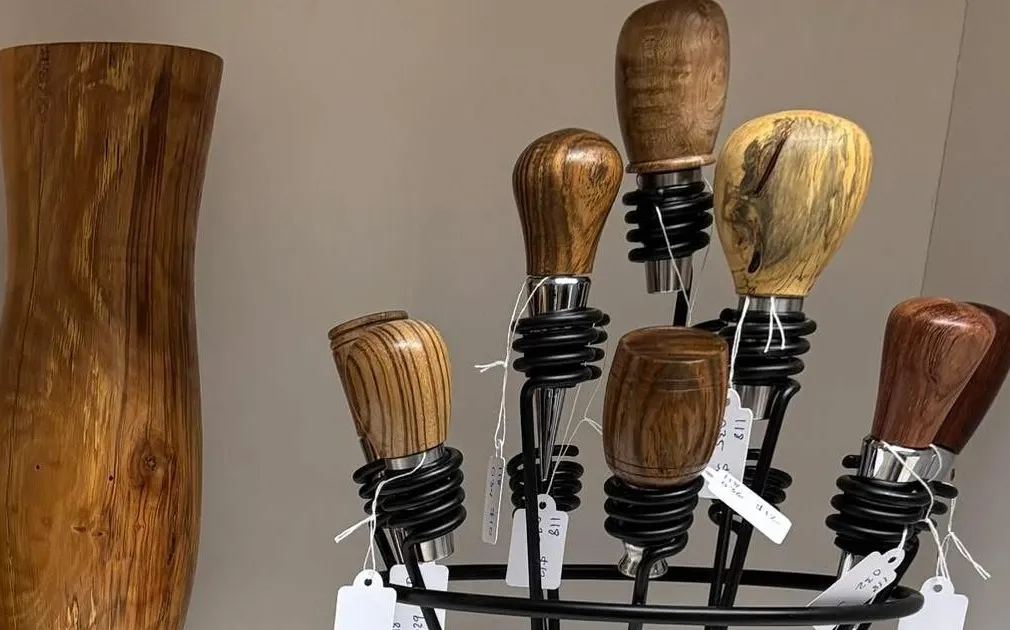
Hand-Turned Wood Bottle Stoppers — A Fast, Sellable Lathe Project
Bottle stoppers are one of the most practical quick-turn projects on the lathe. I’ve made somewhere between 15 and 20 of them — for wine bottles and liquor bottles both — and they’ve been consistently well-received at the shop. Like pens, they sit in the lower price range and give people an accessible way to buy something genuinely handmade without committing to a larger piece.
The Hardware
Bottle stoppers use a two-part hardware insert: a stainless steel stopper mechanism with an expandable rubber seal that fits standard bottle necks, and a threaded rod that screws into the turned wood top. The hardware does the functional work — the wood top is purely the handmade element, which is what gives each one its character.
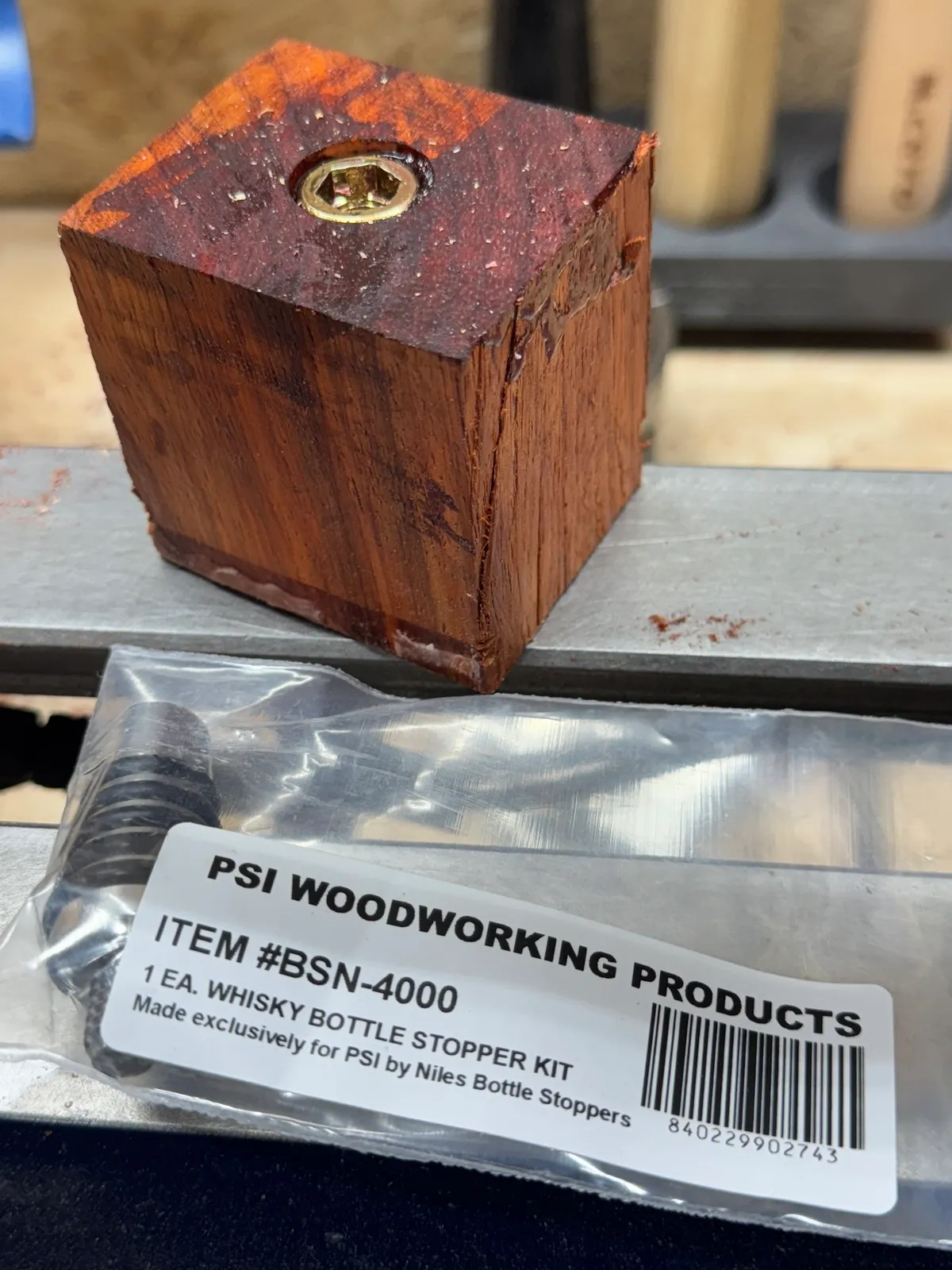
The key thing to know is that wine bottles and liquor bottles use different stopper sizes — so you’ll want to stock both if you’re making a mixed batch. For liquor bottles I use two styles from Niles Bottle Stoppers: the Cosmopolitan and the Stainless Steel stopper (SS-9000), both of which are available through Penn State Industries. For wine bottles, the rubber seal is a different diameter — I use these wine bottle stoppers (affiliate link), which fit standard 750ml necks reliably.
Having both hardware types on hand means a display rack can cover wine drinkers and spirits drinkers, which broadens the appeal considerably at a craft fair.
You’ll also need a stopper mandrel (affiliate link) to hold the blank on the lathe while you turn it — it’s a dedicated chuck that grips the threaded rod while you shape the outside. It’s inexpensive and essential; trying to improvise without one wastes time and produces inconsistent results.
Choosing the Wood
Almost anything turns well at stopper scale, but dense, stable species produce the most reliable results. I’ve had good success with walnut, cherry, and various maples. The tops are small — roughly 1.5” to 2” in diameter — which means figured wood like ambrosia maple, spalted maple, or burl shows off beautifully without needing a large blank. This is a great use for offcuts from larger turning projects that are too small for a bowl but too interesting to throw away.
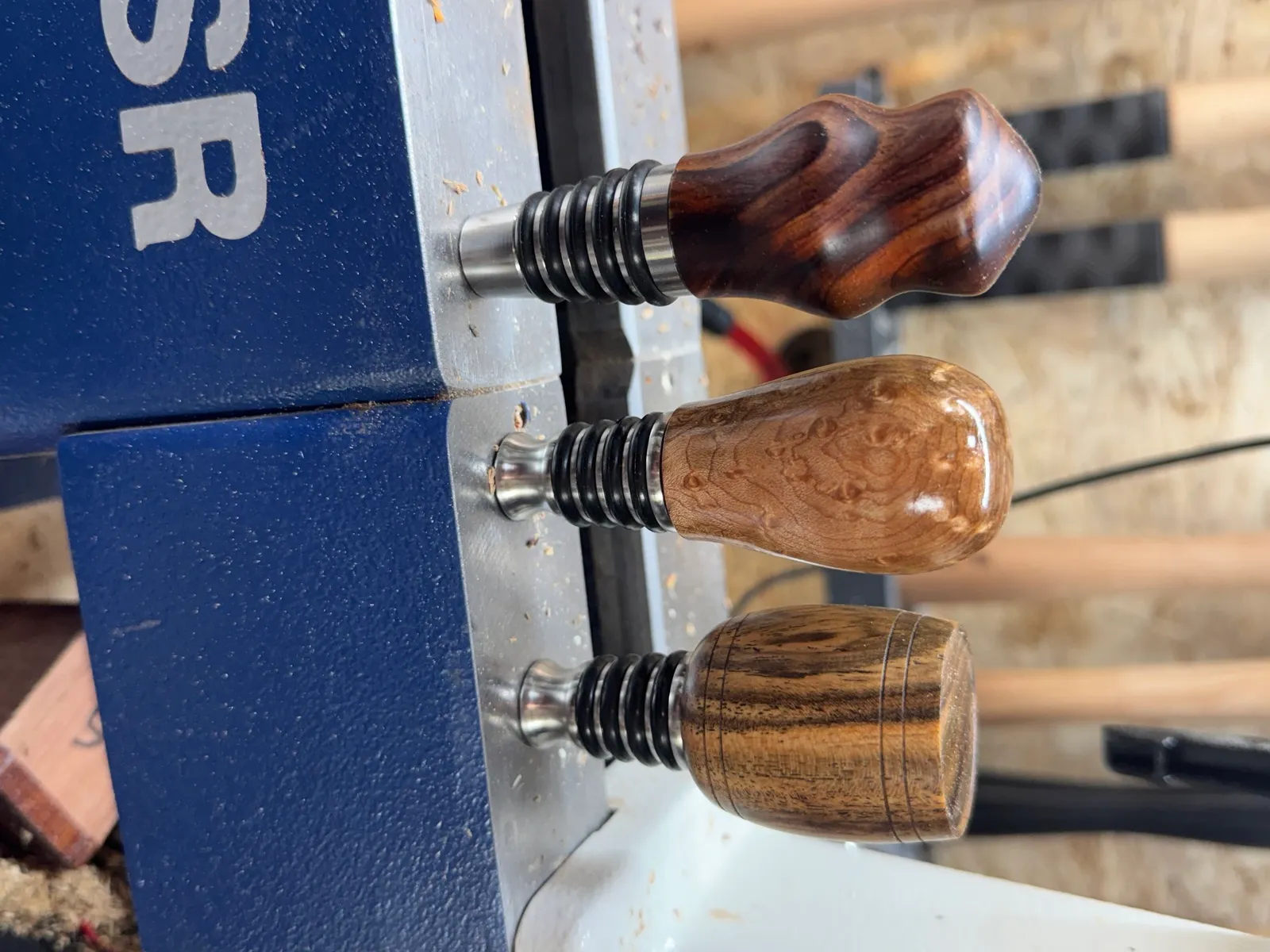
Exotic species also work well here. Padauk’s deep orange, purpleheart’s purple tones, and olive wood’s wavy grain all look striking at this scale. A display rack with a variety of species is a strong visual at a craft fair — the range of color and figure across 8–10 stoppers makes a much better impression than a single piece would. If you don’t have enough shop offcuts to start, these bottle stopper blanks on Amazon (affiliate link) are a convenient way to get a variety of species in the right dimensions without milling your own.
Turning the Top
The form is simple: a rounded or slightly tapered top that fits comfortably in the hand, sized to look proportional to a standard bottle neck. Mount the blank on the stopper mandrel, shape the outside with a spindle gouge, and sand through the grits. The small size means the whole turning takes 10–15 minutes per piece once the blank is prepped.
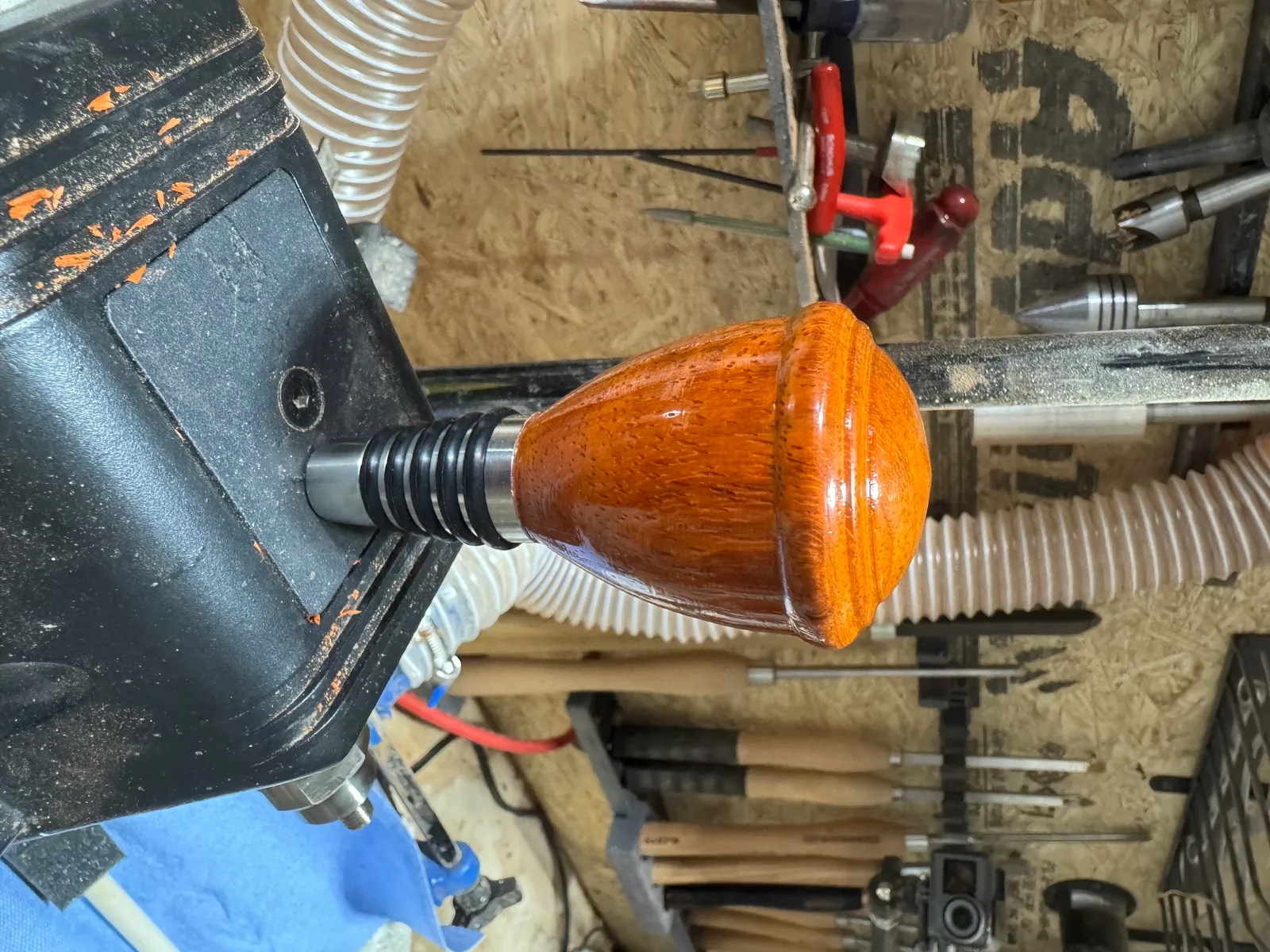
Wall thickness doesn’t matter the way it does with bowls — the wood top is solid, so there’s no risk of cracking from uneven walls or drying movement. That makes stoppers much more forgiving than hollow forms.
Finishing
CA glue is the right call here for the same reasons it works well on pens — it’s durable, food-safe once cured, and produces a high-gloss finish that makes the grain pop. Apply thin coats on the lathe, let each cure with accelerator, and work through micro mesh pads up to 12000 grit to polish. The final result is a surface that feels smooth and looks almost lacquered, which reads as high quality even at the lower price point.
Working in Batches
Stoppers are even faster to batch than pens because there’s no tube-gluing step the night before. I’ll typically prep 8–10 blanks at a time — square them up, drill the center holes on a drill press, then move through turning, sanding, and finishing on all of them before final assembly. Assembly is just threading the hardware rod into the drilled hole with a bit of epoxy to lock it. Ten stoppers in an afternoon is a comfortable pace.
Pricing, Display, and Selling
Finished stoppers sell well in the $10–15 range, which puts them in impulse-buy territory at craft fairs and local shops. The hardware cost per stopper is low, the wood cost is minimal (especially if you’re using offcuts), and the turning time per piece is short — so the margin is solid relative to the time invested.
Display matters a lot with stoppers. A display rack like this one (affiliate link) lets you stand 8–10 stoppers upright so the wood tops are visible at eye level. Each stopper gets a small hang tag with the species name and price. People pick them up, feel the weight, look at the grain — and that tactile experience is exactly what sells handmade work. A stopper rack next to a few bowls rounds out a table at a show and gives lower-budget shoppers something to walk away with.
Explore More
Interested in other quick lathe projects at a similar price point? Hand-turned wood pens → covers kits, wood, CA finishing, and batch production in more detail.
Browse the full wood species guide → if you’re deciding which species to reach for.
Interested in a custom piece with similar character?
I take a limited number of commissions each month to ensure every piece receives the attention it deserves. Let's discuss your custom commission